

Training workshop on
DIMENSIONAL AND SURFACE METROLOGY
17, 18 & 19 November 2026 (Mines Beach Resort, Kuala Lumpur)
What does this training cover?
Metrology plays an important role in the product quality control and assurance in the increasingly competitive manufacturing industry to meet the demand of today’s quality conscious customers. Knowledge of dimensional and surface roughness measurement are essential to ensure and maintain product quality, as well as provide solutions to challenging measurement tasks in the industrial environment.
This three-day intensive training workshop is designed to complement the participant’s practical knowledge in using metrology tools in the industry with the underlying principles of precision dimensional, surface roughness and roundness measurement. Basics concepts covered in this training include terminologies in metrology such as precision, resolution, uncertainty, accuracy etc., types and sources of measurement errors, methods of reducing errors during measurement, working principles of common precision measuring instruments, basics of flatness measurement using an optical flat, essentials of surface roughness and roundness measurement, as well as brief introduction to the field of geometric dimensioning and tolerancing (GD&T). Participants will be guided into grasping the fundamental concepts through interactive sessions with plenty of worked examples and activities. The self-assessment at the end of each topic will allow participants to gauge the depth of their knowledge on the related topic.
How will I benefit?
At the end of the three-day training workshop, the participant should be able to:
-
Compare the various terminologies in metrology, e.g. resolution vs. sensitivity, error vs. uncertainty etc.
-
Distinguish between systematic and random errors in measurement
-
Identify the various sources of errors in measurement and methods of reducing them
-
Determine errors due to ambient temperature, misalignment between part and instrument, parallax etc.
-
Understand the design and working principles of common precision linear measuring instruments
-
Learn how to measure angle on a tapered part using a Sine bar
-
Measure flatness of a polished surface using an optical flat
-
Differentiate between roughness, waviness and form
-
Define the commonly used spatial, amplitude and hybrid roughness parameters
-
Distinguish between skidded and skid less roughness testers
-
Understand the influence of cut-off value on the measured roughness
-
Explain the four common methods of roundness measurement
-
Determine roundness error from a given trace using the LSC, MIC and MCC methods
-
Determine eccentricity, concentricity and runout from roundness test data
-
Interpret feature control frames for various types of dimensional control
What are the detailed topics covered?
Day 1
Pre-training self-assessment
Part 1: Basic Concepts in Metrology (9.00 am - 10.45 am)
Definition of metrology
The need for measurement and inspection
The job of a metrologist
Basic terminologies in metrology: precision, accuracy, error, resolution, sensitivity, range, span, repeatability, reproducibility, uncertainty, and tolerance
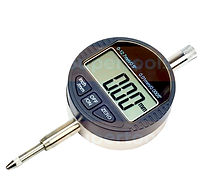
Quiz 1: What can you tell about the dial indicator shown?
Activity 1: What is the difference between the dial indicators shown? (see activity sheet)
Activity 2: From a given set of digital calipers, determine which has: (i) the highest accuracy, (ii) the lowest accuracy, (iii) the highest precision, (iv) the lowest precision (see activity sheet)
Part 1 Self-assessment
Part 2: Measurement Errors, Traceability & Calibration (11.00 am - 1.00 pm)
Types of measurement errors
Causes of measurement errors
Difference between systematic and random errors
Method of detecting systematic error in an instrument
Method of detecting random error
Causes of systematic and random errors
Types of controllable errors: Catastrophic error, cosine error, calibration error, error due to ambient conditions, error due to elastic deformation, and parallax error
Analysis of random errors
Relationship between standard deviation of measurement process and manufacturing process
Measurement standards, calibration and traceability
Hierarchy of measurement standards
Activity 1: Calculate the misalignment error in dial gauge reading (see activity sheet)
Activity 2: Determine measurement error due to temperature deviation from calibration temperature
Part 2 Self-assessment
Part 3a: Linear Measurement (2.00 pm - 3.45 pm)
Meaning of linear measurement
Characteristics of linear measuring instruments
Abbe’s rule
Amplification mechanisms in precision instruments
Principle of vernier instruments
Principle of micrometer instruments
Principles of comparators: mechanical, electrical, pneumatic, optical
Precision measurement using dial comparators and gauge blocks
Length standards: Slip and block gauges according to BS4311:1968, rules for gauge block care
Activity 1a: What is the resolution of the vernier caliper shown? (see activity sheet)
Activity 1b: Design a caliper having a resolution of 0.01 mm
Activity 2: Calculate the resolution of the micrometer
Activity 3: Arrange the instruments in order of increasing resolutions
Activity 4: Determine the dimensions of the specimen block measured using a dial comparator
Activity 5: Select gauge/slip blocks to construct a given length
Part 3b: Angular Measurement (4.00 pm - 5.00 pm)
Angular measurement: Measuring angles using Sine bar, measurement method, combination angle gauges
Activity 6: Determine angle on a tapered block nearest to arc seconds (see activity sheet)
Activity 7: Determine the combination of angle gauges to construct given angles.
Part 3 Self-assessment
Day 2
Part 4a: Straightness Measurement (9.00 am - 10.45 am)
Straightness measurement using autocollimator
Basic principle of autocollimator
Application of autocollimator for straightness measurement
Activity 1: Determine straightness error of guide way on a lathe machine (see activity sheet).
Part 4a: Flatness Measurement (11.00 am - 1.00 pm)
Flatness measurement using optical flats: Basics of fringe formation, interference of light waves, measurement of flatness and parallelism of block gauges
Activity 2: Estimate flatness error on a polished surface from fringe pattern
Part 4 Self-assessment
Part 5a: Roughness Measurement (2.00 pm - 5.00 pm)
Importance of roughness
Why measure roughness?
Factors affecting surface texture
Separating roughness from waviness
Methods of measuring surface roughness
Skidded and skidless roughness testers
Activity 1: Estimate the roughness parameters Ra, Rq and Rz for a given trace (see activity sheet)
Day 3
Part 6: Roundness Measurement (9.00 pm - 1.00 pm)
Roughness parameters: Maximum peak-to-valley roughness (Rmax or Rt), ten-point average roughness (Rz) (ISO 4287-1 (1984)), maximum height of roughness (Rz) (ISO 4287:1997), average roughness (Ra), root-mean-square roughness (Rq), maximum height of peaks (Rp) (ISO4287-1997), maximum depth of valley (Rv) (ISO1997), skewness (Rsk ), kurtosis (Rku )
Roundness measurement
Methods of expressing roundness error: LSC, MCC, MIC, MZC
Concentricity, eccentricity, and cylindricity
Activity 2: Estimate roundness error for a trace shown using LSC, MCC and MIC methods.
Topic 5 Self-assessment
Part 7: Geometric Dimensioning and Tolerancing (2.00 pm - 5.00 pm)
Meaning of tolerance
Benefits of GD&T
Types of dimensioning control: Form, profile, orientation, location and runout tolerance
Material conditions
Feature control frames
Activity 1: Describe the type of tolerance controls shown in the figures.
Activity 2: Identify all the nine tolerance controls in the drawing (see activity sheet)
Topic 7 self-assessment
Post-training self-assessment
What hardware tools are available?
Since the objective of this training is to impart the basic knowledge in metrology and the underlying principles of tools used for precision dimensional measurement, only small portable tools as shown below are made available during the training for hands-on activities:
Who should attend?
This training will benefit technicians, junior engineers and others regularly involved in dimensional measurement and quality assurance but need to brush up their basic knowledge of metrology. Potential participants are encouraged to take this simple quiz to find out whether they need to attend this workshop.
Course duration: Three days (21 hours)
Course fee: RM1,500.00 (inclusive of training materials, lunch and tea breaks)
Maximum number of participants: 20
Registration: CLICK HERE TO REGISTER! BOOK A SEAT TODAY!
Note: The organiser reserves the right to change the venue to another location in the Klang Valley




Who is the trainer?
Dr Mani Maran Ratnam graduated with a B.Eng. degree in Mechanical Engineering from University of Malaya in 1985, and a Ph.D. degree from Polytechnic of Wales (UK) in 1991. His expertise is in the areas of dimensional metrology, optical metrology, surface metrology, machine vision and image processing. He has taught metrology over 25 years at Universiti Sains Malaysa prior to his retirement as a professor in 2021. Since then, he founded MMR Training and Consulting which provides technical trainings mainly in the areas of machine vision, image processing, optical metrology etc.. He is a HRD Corp accredited trainer (Trainer ID 9057).


MMR Training and Consulting
(SA0576104-U)